A New Opportunity for the Seam Trail: Creating a Dedicated Walking and Biking Corridor from Davidson to Charlotte
The idea for the Seam Trail began with the 2013 Mooresville-to-Charlotte Trail Technical Report, which envisioned a 30-mile multi-use greenway running alongside the future Red Line corridor. With the City of Charlotte’s 2025 purchase of 22 miles of the Norfolk Southern O-Line rail easement, the region is now one step closer to creating a continuous walking and biking connection from Mooresville to Charlotte.
However, the existing rail corridor presents a major challenge. More than 90% of the O-Line is currently single-track rail, with much of the corridor constrained by roads, bridges, historic structures, and limited surface width. This creates difficult tradeoffs between commuter rail infrastructure and space for a safe, contiguous greenway.
An underground transit solution for the Red Line could provide a unique opportunity to advance both regional transit and trail goals simultaneously.
By placing transit infrastructure below ground within the 100-foot-wide easement, the limited surface corridor could instead be dedicated to a world-class linear greenway — with ample room for biking paths, walking trails, landscaping, vegetation, and public gathering spaces above a modern, fast, and convenient transit system.
Lessons from Successful Rail-to-Trail and Underground Infrastructure Projects
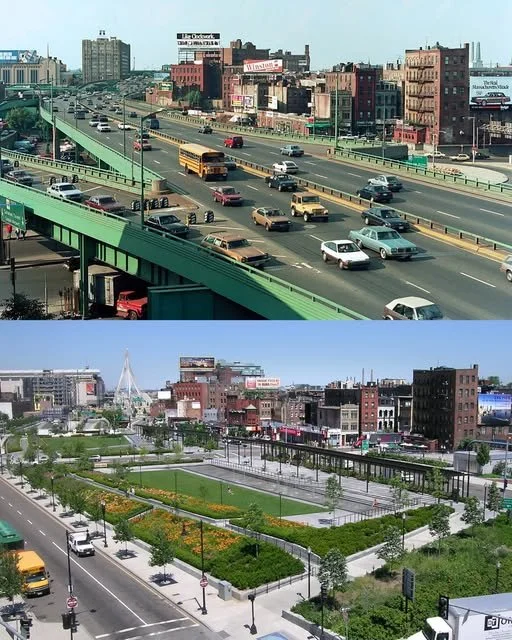
Underground Placement of Elevated Roads in Boston
Across the United States, former rail and transportation corridors have been transformed into some of the country’s most valuable recreational and economic assets.
The Virginia Creeper Trail — a 34-mile scenic trail in southwestern Virginia — emerged after rail service ended in 1977. Local governments, community advocates, and the U.S. Forest Service acquired the corridor in the late 1970s and early 1980s, creating a trail that now attracts more than 180,000 visitors annually and significantly boosts local tourism economies.
Another example is the Big Dig in Boston. Although not a rail conversion, the project buried the city’s elevated Central Artery highway underground, freeing valuable surface land for the Rose Kennedy Greenway — a 17-acre network of parks, pathways, and public spaces that reconnected neighborhoods, improved air quality, and transformed the urban environment.
Other well-known examples include the High Line and Missouri’s Katy Trail State Park, one of the nation’s longest rail-trails at more than 237 miles.
These projects demonstrate how transportation corridors can evolve into major public assets that improve quality of life, encourage economic development, and strengthen regional connectivity.
Current Status of the O-Line Corridor
The City of Charlotte purchased 22 miles of the Norfolk Southern O-Line rail corridor in 2025, along with a three-year option to purchase additional rail segments extending north of Mooresville. Ownership of the corridor is expected to transfer to the newly formed Metropolitan Public Transit Authority (MPTA), a 27-member regional board tasked with evaluating and selecting the future transit mode for the Red Line corridor.
The decision made by the MPTA will significantly shape the future of both transit and trail connectivity in the region.
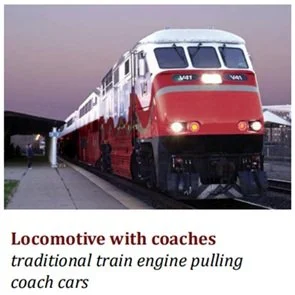
Surface Commuter Rail Option
If the MPTA selects traditional diesel commuter rail operating on the surface corridor, the existing tracks and infrastructure would likely need to be removed and replaced with upgraded rail systems, signaling, utilities, and passing sidings to support reliable two-way service on what is currently a predominantly single-track corridor.
While some limited “rail-with-trail” sections could potentially be developed — similar to portions of Charlotte’s Blue Line in South End — these segments would likely be fragmented and inconsistent. In many constrained areas, any available space would instead be needed to support rail operations and future capacity improvements.
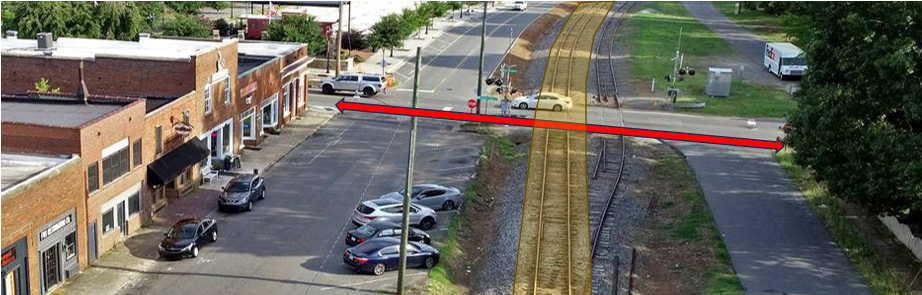
Existing O-Line Easement is Constrained by existing roads and structures making a Rail-with-Trail option difficult
Underground Transit + Surface Greenway Opportunity
An underground transit solution using electric shuttle or tunnel-based technology could preserve the surface corridor for public recreational use while still delivering high-capacity transit service.
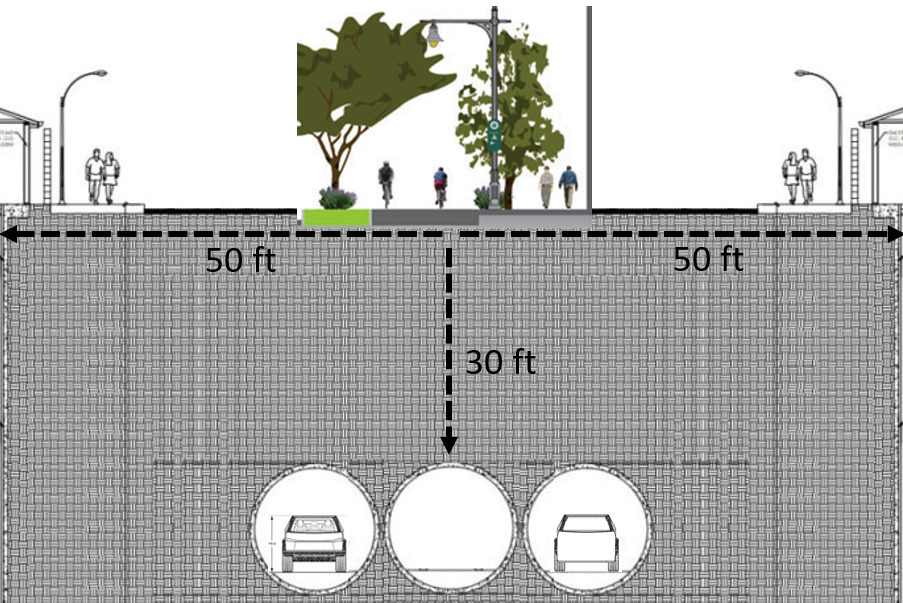
Example Single Track Rail Line Conversion to Greenway
Because underground infrastructure would not require major reconstruction of the surface rail alignment, the existing corridor could potentially transition into a continuous greenway connecting Uptown Charlotte with Derita, Huntersville, Cornelius, Davidson, and eventually Mooresville.
Today, only a small number of freight customers reportedly use portions of the existing surface rail corridor on an infrequent basis. Without substantial taxpayer-funded upgrades to maintain freight-compatible rail infrastructure, portions of the corridor could eventually become candidates for service discontinuation, abandonment, or railbanking through the Surface Transportation Board and the National Trails System Act framework.
Importantly, railbanking can preserve future rail reactivation rights while still allowing interim trail use — a model successfully used in many trail projects across the country.
A Regional Opportunity
A continuous Seam Trail and Carolina Thread Trail connection from Davidson to Charlotte would represent far more than a recreational amenity. It would create a regional transportation and economic asset that supports:
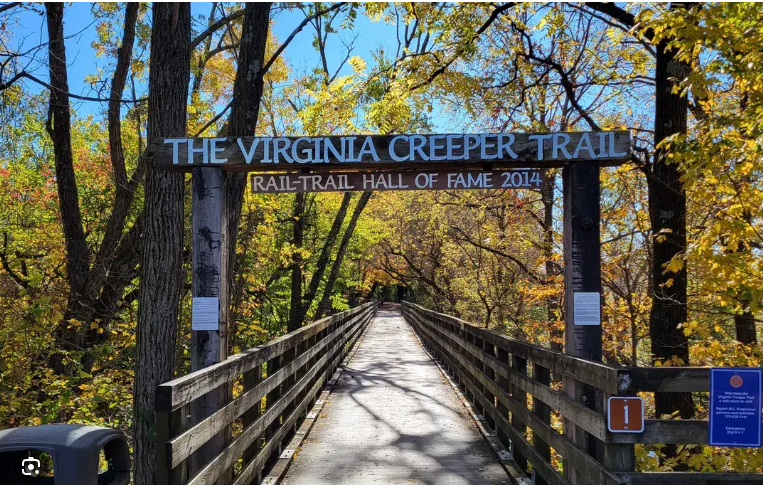
The Virginia Creeper Trail — a 34-mile scenic trail in southwestern Virginia — emerged after rail service ended in 1977. Local governments, community advocates, and the U.S. Forest Service acquired the corridor in the late 1970s and early 1980s, creating a trail that now attracts more than 180,000 visitors annually and significantly boosts local tourism economies.
Safer biking and pedestrian connectivity
Expanded access to green space
Tourism and small business activity
Health and wellness initiatives
Regional mobility and livability goals
Connections between communities throughout northern Mecklenburg and possibly southern Iredell counties
This approach could advance Charlotte’s transit vision while also helping fulfill the long-term goals of the Seam Trail and Carolina Thread Trail networks.
The O-Line corridor represents a once-in-a-generation opportunity. Thoughtful collaboration between transit leaders, trail advocates, local governments, and the community could help ensure this corridor serves both mobility and quality-of-life needs for decades to come.
#SeamTrail #CarolinaThreadTrail #RedLine #CharlotteGreenways #RailsToTrails #UndergroundTransit